In the Garden Blog
Cincinnati's Garden Blog "In the Garden"
10 Trees that Give Your Yard Beautiful Fall Color
Few things make a Cincinnati landscape feel more beautiful than trees dressed in their autumn best. These 10 trees bring brilliant shades of red, orange, gold, and russet to the yard—and many offer beauty in other seasons, too.
There’s a moment every fall when the landscape seems to change overnight.
The maples turn crimson. Oaks take on warm shades of russet and bronze. Ginkgo leaves become golden yellow, while smaller ornamental trees add pops of color around patios, gardens, and front walks.
For Cincinnati gardeners, fall is also a wonderful reminder of what trees can bring to a landscape. A thoughtfully chosen tree can provide summer shade, spring flowers, interesting foliage, or beautiful bark—and then finish the year with a spectacular display of fall color.
Whether your yard has room for a large shade tree or you’re looking for something smaller, these trees for fall color are worth considering.
1. Urban Sunset® Maple 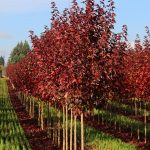
Fall color: Red and orange
Maples are synonymous with fall, and Urban Sunset® Maple delivers the kind of color that makes you slow down and take notice.
Its foliage develops rich autumn shades of red and orange, creating a beautiful contrast against the green lawn or evergreen trees. Like other maples, it also brings welcome shade during Cincinnati’s hot summer months.
Give this tree plenty of room to develop its mature canopy, and it can eventually become one of the defining features of the landscape.
Garden idea: Plant a maple where you can enjoy its fall color from inside the house. A beautiful view doesn’t have to be reserved for the backyard.
2. Autumn Fantasy® Freeman Maple 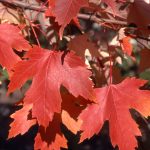
Fall color: Red and orange
If you love the classic look of a mature shade tree, Autumn Fantasy® Freeman Maple is worth a closer look.
This hybrid maple combines the qualities of red and silver maples and is known for its vigorous growth and colorful fall foliage. As autumn progresses, its green leaves transition into warm shades of red and orange.
It’s particularly beautiful planted in an open lawn where its branching structure and changing foliage can be appreciated from every angle.
Garden idea: Let the tree stand on its own rather than surrounding it with too many other plants. Sometimes a single beautiful tree is all a landscape needs.
3. Royal Red Maple 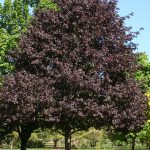
Fall color: Red
For a landscape with a little more drama, consider a red maple with deep, colorful foliage.
Royal Red Maple brings rich color throughout the growing season, followed by a striking fall display. Its strong presence makes it especially effective as a specimen tree in a front or back lawn.
Red foliage also creates an opportunity to play with color elsewhere in the garden.
Garden idea: Pair it with golden ornamental grasses or plants with chartreuse foliage for a beautiful contrast.
4. Pink Flair® Sargent Cherry 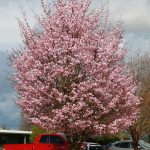
Fall color: Orange and red
Fall isn’t the only season when Pink Flair® Sargent Cherry earns attention.
Its spring flowers provide an early-season show, followed by green summer foliage and warm orange-red color in autumn. Its relatively narrow form also makes it useful in residential landscapes where a large spreading shade tree isn’t practical.
Think of it as a four-season tree rather than simply a fall-color tree.
Garden idea: Plant it near a walkway, patio, or front entrance so you can enjoy its changing appearance year-round.
5. Princeton Sentry® Ginkgo 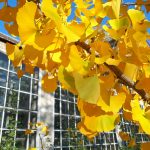
Fall color: Golden yellow
Not every autumn landscape needs to be red and orange.
Ginkgo trees offer something completely different: brilliant golden-yellow foliage.
The fan-shaped leaves of Princeton Sentry® Ginkgo remain green through summer before turning a rich, luminous yellow in fall. Then, often seemingly all at once, the leaves drop, leaving the tree’s interesting branching structure behind.
Its narrow, upright habit makes it particularly useful where space is limited.
Garden idea: Golden fall foliage looks beautiful against dark evergreens or a deep green hedge.
6. American Hornbeam 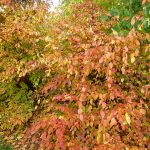
Fall color: Yellow, orange, and red
Sometimes the most charming trees are the ones that feel as though they’ve always belonged in the landscape.
American Hornbeam is a native tree with an elegant, naturally graceful form. Its foliage turns warm shades of yellow, orange, and red in autumn, while its smooth, muscular-looking trunk and branches provide winter interest after the leaves fall.
It’s a wonderful choice for a more naturalistic garden.
Garden idea: Use American Hornbeam near a woodland edge, beneath taller trees, or alongside native shrubs and perennials.
7. Northern Red Oak 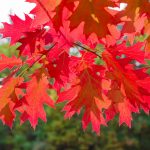
Fall color: Red and russet
There’s something timeless about an oak tree.
Northern Red Oak is a large, long-lived shade tree that can become an important part of the landscape for generations. Its leaves develop warm red and russet tones in fall, while its broad canopy provides welcome summer shade.
Because this is a large tree, planting location matters. Consider the mature size before you put the shovel in the ground.
Garden idea: Give a red oak plenty of breathing room, and let the surrounding lawn or lower plantings frame its canopy.
8. Shumard Red Oak 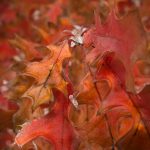
Fall color: Red
Another magnificent oak for a larger landscape, Shumard Red Oak offers a combination of shade, structure, and autumn color.
Its substantial canopy gives a property a sense of permanence, while its reddish fall foliage adds seasonal interest.
This is the kind of tree that gets better with age—a reason to think beyond what the landscape looks like today.
Garden idea: If you’re planting for the long term, consider how the tree will look from the street, from your windows, and from outdoor living spaces as it matures.
9. Chinkapin Oak 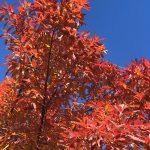
Fall color: Yellow, bronze, and brown
Looking for a fall tree that isn’t quite as predictable as a maple?
Chinkapin Oak offers a beautiful alternative. Its foliage develops warm autumn tones, while its naturally attractive form adds year-round structure to the landscape.
It’s also a native oak, making it an appealing choice for gardeners who want more native plants in their landscape.
Garden idea: Combine it with native shrubs, grasses, and perennials to create a garden that feels connected to the surrounding landscape.
10. Frontier Elm 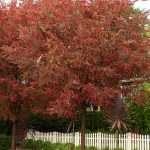
Fall color: Yellow to reddish-purple
Frontier Elm brings a different shape and character to the fall landscape.
Its upright form provides strong vertical structure, while the foliage changes color as autumn progresses. The result is a tree that can provide both architectural interest and seasonal beauty.
It’s a good reminder that fall color isn’t always about a single brilliant moment. Sometimes the subtle changes over several weeks are what make a garden interesting.
Garden idea: Use an upright tree to add height along a property edge, driveway, or larger planting bed.
How to Choose a Fall-Color Tree for Your Yard
Before choosing a tree based solely on its fall color, take a look at the space where you want to plant it.
Consider the Mature Size
That little tree at the garden center may eventually be much larger than you imagine. Check the mature height and width and make sure there is enough room for the canopy and root system.
Look at the Sunlight
Some trees perform best in full sun, while others tolerate partial shade. Watch your planting area throughout the day before deciding where to plant a tree.
Think About the View
Where will you see the tree most often? A tree planted where you can enjoy it from a kitchen window, porch, patio, or favorite garden chair will give you much more pleasure than one tucked away where its fall color goes unnoticed.
Don’t Forget the Other Seasons
Fall color is wonderful, but the best landscape trees often offer something else, too—spring flowers, summer shade, interesting bark, berries, wildlife value, or beautiful structure after the leaves fall.
Plant for the Fall Landscape You Want
A beautiful autumn landscape doesn’t happen by accident. It begins with trees chosen for the right place—and given enough time to grow into themselves.
For Cincinnati gardeners, that may mean a towering oak shading the backyard, a maple glowing red across the lawn, or a small ornamental tree adding a splash of color beside the front walk.
And while we tend to think of fall as the season when trees put on their biggest show, the real reward is knowing that the tree you plant today can become part of the landscape for many years to come.
The best time to imagine next year’s fall color? Start with the trees you plant today. See the over 200 Kinds of Trees growing at Natorp’s.
 print
print