Is Your Evergreen Winter Burned?
Is Your Evergreen Dead — or Just Winter Burned?
Seeing brown, bronze, or dried-out evergreen foliage in late winter or early spring? You’re not alone. This is a common issue 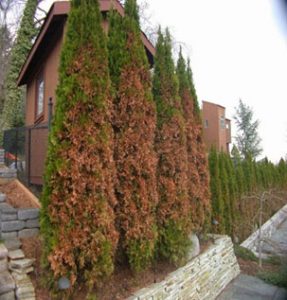 called winter burn or winter bronzing, and it can affect both newly planted and established evergreens.
It shows up on many types of evergreens, including:
-
Broadleaf evergreens like boxwood, rhododendron, azalea, holly, laurel, nandina, euonymus, and magnolia
-
Needled evergreens like pine, spruce, yew, and hemlock
-
Scale-leaf evergreens like arborvitae, false cypress, and juniper
-
Plants that are only marginally hardy in Zones 6a–6b
Why It Happens
Winter burn can be caused by one or several factors, including:
-
New plants with immature root systems
-
Frozen soil that prevents water uptake
-
Fall drought or warm fall weather
-
Sudden temperature drops
-
Harsh winter winds
-
Sunny winter days
-
Colder-than-normal temperatures
-
Salt spray
-
Exposure based on planting location
What To Do
Be patient
In many cases, bronzed foliage improves as temperatures rise. Brown needles or leaves may drop naturally, and the plant may push new growth later in spring. It can take until mid-May to know how well a plant will recover.
Do a scratch test
Before pruning, lightly scratch the bark on a branch.
-
Green underneath = the branch is still alive
-
Brown underneath = that part is dead and can be removed
Prune only if needed
Wait until mid-spring to prune damaged tips or dead branch ends. For mild damage, pruning may not be necessary since fresh growth often fills things in.
Water through spring and summer
Evergreens recovering from winter stress benefit from consistent moisture, especially during dry periods.
Feed in mid-spring
Fertilizer is optional, but it can help, especially for newer plantings. Apply a product like Espoma Plant-tone, Fertilome Tree & Shrub Food, or a water-soluble root stimulant when new growth begins.
Replace if there’s no recovery
If by mid-May the plant is still brown, buds are dry, stems are brittle, and there’s no sign of new growth, it may need to be replaced.
Not Sure?
Send us a photo and we’ll help you assess it: questions@natorp.com
Let the plant tell you what it’s going to do — and give it a little time first.